lodi 291 login The House Edge Explained
lodi 291 login: The House Edge Explained
Welcome to an in-depth exploration of one of the most fundamental concepts in Online Gaming: The House Edge. For players looking to maximize their experience and understand the mechanics behind their favorite casino games, grasping the house edge is paramount. Whether you’re a seasoned player or new to the world of online casinos, understanding this concept is crucial for informed gameplay. This article will demystify the house edge, explaining what it is, how it works across various games, and what it means for your gaming strategy. We'll delve into how this mathematical advantage ensures casinos remain profitable and how you, as a player, can make smarter choices. With lodi 291 login, we aim to provide a transparent and educational gaming environment, helping you navigate the exciting landscape of online casinos in the Philippines market.
Table of Contents
- What Exactly is The House Edge?
- How The House Edge Works in Different Games
- Calculating and Understanding The House Edge
- Strategies to Minimize The House Edge
- The Role of Game Providers and Payout Rates
- Responsible Gaming and The House Edge
What Exactly is The House Edge?
The house edge is a fundamental concept in gambling that represents the casino's built-in advantage over players. It's expressed as a percentage and indicates the average profit the casino expects to make from each bet placed over the long term. For instance, if a game has a 2% house edge, it means that for every ₱100 wagered, the casino expects to keep ₱2 as profit, while ₱98 is returned to players in winnings. This doesn't mean you'll lose ₱2 every time you bet ₱100; rather, it's a statistical average that plays out over thousands or millions of bets. The house edge is meticulously calculated into the rules and payouts of every casino game, ensuring the casino's long-term profitability. It's how casinos, including online platforms like those offering Online Gaming, operate as viable businesses. Understanding this percentage helps players make informed decisions about which games to play and how to manage their bankroll. It's not about cheating; it's about the mathematical reality of casino operations. Different games have different house edges, making some games statistically more favorable to players than others. Familiarizing yourself with these percentages is a key step towards becoming a more strategic player.
How The House Edge Works in Different Games
The house edge varies significantly across different casino games, reflecting their unique rules, payout structures, and probabilities. Here’s a look at how it manifests in popular categories:
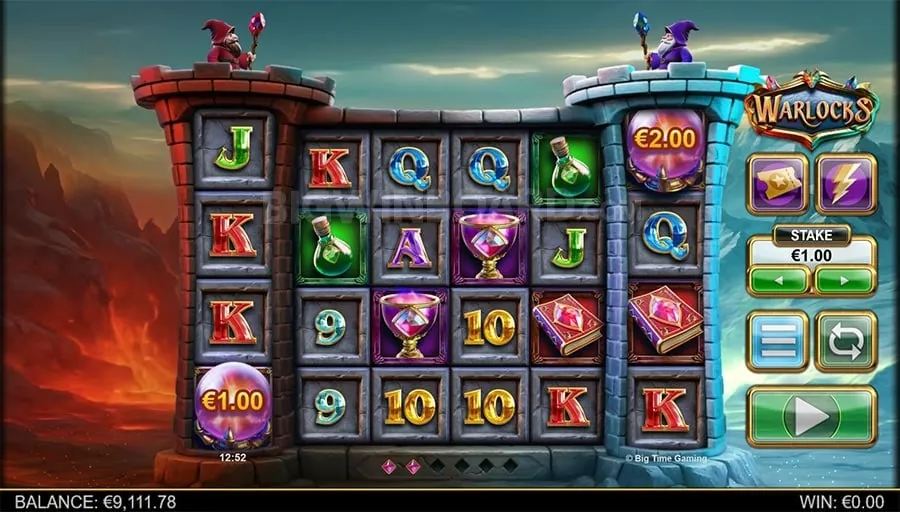
- Slots: Slot machines, often powered by providers like JDB Gaming, AP Gaming, JILI Games, and Play’n GO, typically have a house edge ranging from 2% to 15% or even higher, depending on the game and jurisdiction. This is often expressed as Return to Player (RTP) percentage, where RTP = 100% - House Edge. A slot with a 96% RTP has a 4% house edge. Factors like bonus rounds, free spins, and progressive jackpots can influence the perceived edge, but the underlying mathematics remains.
- Blackjack: Blackjack is renowned for having one of the lowest house edges, often below 1% for players who employ basic strategy. This low edge is due to the player's ability to make decisions (hit, stand, double down, split) that influence the outcome. However, deviations from basic strategy or specific rule variations can increase the house edge.
- Roulette: The house edge in roulette depends on the version played. European Roulette (single zero) has a house edge of approximately 2.70%, while American Roulette (double zero) has a higher edge of around 5.26% due to the extra '00' slot. This is a clear example of how a small rule change can significantly impact the casino's advantage.
- Baccarat: Baccarat offers a relatively low house edge, especially on the Banker bet (around 1.06%) and Player bet (around 1.24%). The Tie bet, while offering a much higher payout, also comes with a significantly higher house edge (often over 14%), making it a less favorable option for strategic players.
- Poker (Casino variants like Casino Hold'em): In casino poker variants, the house edge is usually applied to the ante or initial bet, or through a commission (rake) on winning hands. For example, in games like Casino Hold'em, the house edge is typically around 2-3% against the player's initial ante, assuming optimal play.
- Sports Betting: For Sports betting, the house edge is embedded in the odds offered by the bookmaker. This is often referred to as 'vigorish' or 'juice'. Bookmakers adjust odds to ensure a profit margin regardless of the outcome.
Understanding these differences is crucial for any player engaging in Online Gaming. Platforms like lodi 291 login provide a wide array of games from top Game Providers, and knowing the house edge for each can help you choose games that align with your risk tolerance and strategic preferences.
Calculating and Understanding The House Edge
While players don't typically need to calculate the house edge themselves (as it's often published or can be derived from game rules), understanding how it's calculated provides deeper insight into game mechanics. The basic formula involves comparing the true odds of an event occurring with the payout odds offered by the casino.
Formula for House Edge:
House Edge = (True Odds - Payout Odds) / True Odds
Or, more simply, it's the expected loss per unit wagered over the long run.
Let's consider an example with a single-zero roulette wheel. There are 37 pockets (1-36 plus 0). If you bet on a single number, the true odds of winning are 1 in 37. However, the casino typically pays out 35 to 1 for a single number win. This discrepancy creates the house edge.
- True Probability of Winning: 1/37
- Casino Payout: 35 units for a 1-unit bet (you keep your 1 unit bet + get 35 units profit = 36 units total return).
If you bet ₱1 on every number (37 bets of ₱1 each), you'd spend ₱37. You'd win one bet, receiving ₱36 (₱1 original bet + ₱35 profit). Your net loss would be ₱1 (₱37 spent - ₱36 received). The house edge is ₱1 / ₱37 ≈ 0.0270 or 2.70%. This simple example illustrates how the casino's payout structure is designed to ensure a long-term profit.
For slot machines, the concept is similar but more complex due to the vast number of possible combinations and varying payouts. The Game Providers like JILI Games or PS (PS Gaming) program their games with a specific Return to Player (RTP) percentage, which is the inverse of the house edge (RTP = 100% - House Edge). An RTP of 96% means the house edge is 4%. This figure is calculated over millions of spins and represents the theoretical long-term payout.
Understanding these calculations helps players appreciate that the house edge is not about individual session outcomes, which can be highly volatile, but about the statistical certainty over an extended period. It’s a crucial piece of information for managing expectations and bankroll when engaging in Online Gaming.
Strategies to Minimize The House Edge
While the house edge is an inherent part of casino games, players can employ various strategies to minimize its impact and improve their chances of winning or extending their playtime. These strategies are particularly relevant for players on platforms like lodi 291 login in the Philippines Market:
- Choose Games with Lower House Edge: This is the most straightforward strategy. Games like Blackjack (with basic strategy), Baccarat (Banker bet), and European Roulette generally offer a lower house edge compared to American Roulette or many slot games. Always check the RTP for slots from providers like VA Gaming and Wolf Gaming.
- Master Basic Strategy in Skill-Based Games: For games like Blackjack and Video Poker, learning and consistently applying basic strategy is paramount. Basic strategy charts are readily available and can significantly reduce the house edge, sometimes to less than 0.5%. Without it, the house edge can skyrocket.
- Understand Game Rules and Payouts: Before playing any game, especially those from diverse Game Providers, thoroughly understand its specific rules and payout structure. Even minor rule variations (e.g., in Blackjack or Video Poker) can impact the house edge.
- Utilize Promotions and Bonuses Wisely: Online casinos often offer bonuses and promotions. While these don't reduce the house edge, they can provide extra funds to play with, effectively giving you more chances to win without additional personal investment. Always read the terms and conditions, especially wagering requirements.
- Practice Bankroll Management: Setting a budget and sticking to it is crucial. Good bankroll management ensures you don't chase losses and can continue playing within your means. This indirectly helps by preventing rapid depletion of funds due to the house edge.
- Avoid "Sucker Bets": Many games have specific bets with a significantly higher house edge. For example, the Tie bet in Baccarat or certain proposition bets in Craps. Learn to identify and avoid these bets.
- Play Progressive Jackpots Strategically: While progressive jackpots offer massive payouts, their base game often has a higher house edge. Only play them if the jackpot is large enough to make the theoretical RTP favorable, though this is rare.
By combining these strategies with informed decision-making, players can effectively manage their gaming experience and potentially increase their long-term enjoyment and success on Online Gaming platforms.
The Role of Game Providers and Payout Rates
The integrity and fairness of Online Gaming are heavily influenced by the Game Providers that supply the casino software. Reputable providers are crucial for ensuring that the stated house edge and payout rates (RTP) are accurate and that games are genuinely fair and random. Platforms like lodi 291 login collaborate with industry-leading providers such as JDB Gaming, AP Gaming, JILI Games, PS (PS Gaming), TP Gaming, VA Gaming, Wolf Gaming, and Play’n GO. Here’s why their role is so significant:
- Fairness and Randomness: Top-tier Game Providers utilize certified Random Number Generators (RNGs) to ensure that game outcomes are completely random and unbiased. These RNGs are regularly audited by independent third-party agencies (like eCOGRA or iTech Labs) to verify their fairness. This ensures that the house edge is applied consistently and not manipulated.
- Published RTPs: Many reputable providers openly publish the Return to Player (RTP) percentages for their slot games and other digital offerings. This transparency allows players to make informed choices about which games to play, based on their preferred payout rates. A higher RTP means a lower house edge.
- Game Design and Mechanics: Providers design games with specific mathematical models that determine the house edge. This includes the number of reels, paylines, bonus features, and symbol values for slots, or the specific rules and payout tables for table games. Their expertise ensures a balanced and engaging gaming experience while maintaining the casino's profitability.
- Regulatory Compliance: In regulated markets like the Philippines Market, Game Providers must adhere to strict regulatory standards. This often includes requirements for minimum RTPs, ensuring that games are not excessively unfavorable to players.
- Variety and Innovation: The competition among Game Providers drives innovation, leading to a vast array of games with different themes, features, and volatility levels. While the house edge is a constant, the diversity keeps Online Gaming fresh and exciting.
By choosing a casino that partners with reputable Game Providers, players can be confident that the games they play are fair and that the stated house edge accurately reflects the long-term statistical advantage of the casino. This transparency is key to building trust and ensuring a positive Online Gaming experience.
Responsible Gaming and The House Edge
Understanding the house edge is not just about strategy; it's also a cornerstone of responsible gaming. Recognizing that the casino always has a statistical advantage over the long term is vital for maintaining a healthy and enjoyable relationship with Online Gaming. Here’s how the concept of the house edge ties into responsible gaming practices:
- Realistic Expectations: Knowing about the house edge helps set realistic expectations. It reinforces that gambling is primarily a form of entertainment with an inherent cost, not a guaranteed way to make money. While short-term wins are possible and exciting, long-term play will, on average, result in losses due to the house's advantage.
- Budgeting and Bankroll Management: The house edge underscores the importance of strict budgeting. Players should only wager what they can comfortably afford to lose, recognizing that the odds are always slightly against them. This is where responsible bankroll management, facilitated by various Payment Options like Maya, Fortunepay, BPI, Unionbank, Dragonpay, Visa, and GCash, becomes critical.
- Avoiding Chasing Losses: A clear understanding of the house edge helps prevent the dangerous habit of chasing losses. When you understand that the house edge remains constant, regardless of previous outcomes, you'll realize that increasing bets to recover losses is a futile and risky strategy that only exposes more money to the casino's advantage.
- Time Limits: Just as important as financial limits are time limits. Prolonged play, even on games with a low house edge, will eventually see the statistical advantage of the casino play out. Setting time limits helps keep gambling as a leisure activity.
- Seeking Help When Needed: For some, the thrill of gambling can become problematic. Recognizing the mathematical certainty of the house edge can be a sobering reminder that gambling should be for fun. If gaming stops being enjoyable or you feel you're losing control, platforms like lodi 291 login often provide resources and tools for responsible gaming, including self-exclusion options and links to support organizations.
Ultimately, the house edge is a core component of the casino business model. By understanding it, players can approach Online Gaming with greater awareness, make more responsible decisions, and ensure their experience remains entertaining and sustainable.
Understanding the house edge is a critical step towards becoming a more informed and strategic player in the world of Online Gaming. It's the mathematical reality that underpins all casino operations, ensuring their long-term profitability while offering players the excitement and potential for wins. By choosing games with lower house edges, employing optimal strategies, and managing your bankroll wisely, you can enhance your gaming experience and extend your playtime. Remember, the goal of gaming should always be entertainment, and knowing the house edge helps maintain a realistic perspective. Ready to apply your newfound knowledge? Visit lodi 291 login today to explore a wide range of games from top providers and discover exciting promotions tailored for the Philippines Market. Sign up now and start your informed gaming journey!
Frequently Asked Questions
Question 1: Can I overcome the house edge?
Answer: Over the long term, no, you cannot overcome the house edge. It's a mathematical certainty that ensures the casino's profitability. However, in the short term, due to luck and variance, it is possible to win. Strategic play in certain games (like Blackjack with basic strategy) can minimize the house edge, but never eliminate it entirely.
Question 2: How does the house edge affect my chances of winning a jackpot?
Answer: The house edge applies to all bets, including those that could lead to a jackpot. While a jackpot offers a massive payout, the probability of hitting it is very low, and the house edge ensures that, on average, players will spend more trying to hit it than they will win over time. The house edge is factored into the overall RTP of a slot game, including its jackpot contributions.
Question 3: Are games from all Game Providers fair regarding the house edge?
Answer: Reputable Game Providers (like those partnered with lodi 291 login) are rigorously tested and certified by independent auditors to ensure fairness and accurate RTPs. This means their games are designed to operate with the advertised house edge. Always choose casinos that feature games from well-known and licensed providers to ensure a fair gaming experience.
Question 4: Does using different Payment Options affect the house edge?
Answer: No, the choice of Payment Options (such as Maya, GCash, or Visa) has no direct impact on the house edge of casino games. The house edge is an intrinsic mathematical component of the game itself, determined by its rules and payout structure. Payment methods only affect how you deposit and withdraw funds, not the game's odds.